Getting Started with Cryptocurrency: A Beginner-Friendly Introduction
By H.S. Kodithuwakku
Published: Aug 29, 2025

Table of Contents
In this article, we take a complete look at the world of cryptocurrency, starting from the basics of what cryptocurrency is and a brief history of its development, to the core technologies that power it. Also, we'll talk about how secure cryptocurrency transactions are, how to store your digital assets safely, and how to buy and sell cryptocurrencies. In addition, we'll cover the risks associated with crypto investing and answer some of the most commonly asked questions to help you get a better understanding of the financial world.
Introduction to Cryptocurrency
A digital currency that functions independently of banks and governments is called cryptocurrency. It manages the creation of new units and secures transactions using sophisticated encryption, or cryptography. Cryptocurrencies, in contrast to conventional currencies, are decentralised, which means that a network of computers, not a single authority, powers them. It is more transparent, borderless, and censorship-resistant due to its decentralised structure.
With the launch of Bitcoin in 2009, the idea of cryptocurrencies was born, ushering in a new era of digital finance. Since then, thousands of cryptocurrencies have appeared, each with a distinct function like digital asset management, decentralised apps, and online payments. This technology's capacity to offer financial independence and innovation outside of the conventional banking system has drawn attention from all over the world over time.
The potential of cryptocurrencies to make financial transactions quicker, less expensive, and more accessible to anybody with an internet connection is one of the primary reasons they have grown in popularity. Cryptocurrencies are used by people to invest, buy goods and services, send money across borders, and take part in decentralised finance systems that do not depend on middlemen. For many, it symbolises a shift towards a more open and inclusive global economy as well as a new form of currency.
The technology underlying cryptocurrencies, how to buy, sell, and store them safely, as well as the opportunities and risks associated with this quickly developing financial revolution, will all be covered in the sections that follow.
A Brief History of Cryptocurrency
The concept of digital money has been around for decades, but the true breakthrough came in 2009 with the launch of Bitcoin by an anonymous person or group known as Satoshi Nakamoto. Bitcoin introduced the world to blockchain technology, enabling secure, decentralized, peer-to-peer transactions without relying on banks or governments.
Following Bitcoin’s success, thousands of other cryptocurrencies emerged, each designed with unique features and purposes. Ethereum, launched in 2015, expanded blockchain’s use beyond payments by enabling smart contracts and decentralized applications (dApps). Over the years, the ecosystem has grown rapidly, giving rise to DeFi (Decentralized Finance), NFTs (Non-Fungible Tokens), and countless innovations in digital assets.
How Does Cryptocurrency Work?
At its core, cryptocurrency relies on a peer-to-peer network where transactions are recorded on a public ledger called the blockchain. Here’s a simplified overview:
- Transaction Initiation: A user requests a transaction (e.g., sending Bitcoin to another user).
- Verification: Transactions are confirmed by the network through consensus methods such as Proof of Work or Proof of Stake.
- Recording: Once verified, the transaction is added to a block and appended to the blockchain.
- Completion: The recipient receives the cryptocurrency, and the transaction is visible to all network participants.
Understanding Blockchain Technology
Blockchain technology serves as the foundation of digital currencies and is at the core of their operation. It functions as a decentralized and tamper-resistant database where every transaction is securely recorded. Each block includes a set of verified transactions, a timestamp, and a cryptographic reference to the previous block, maintaining data integrity across the network.
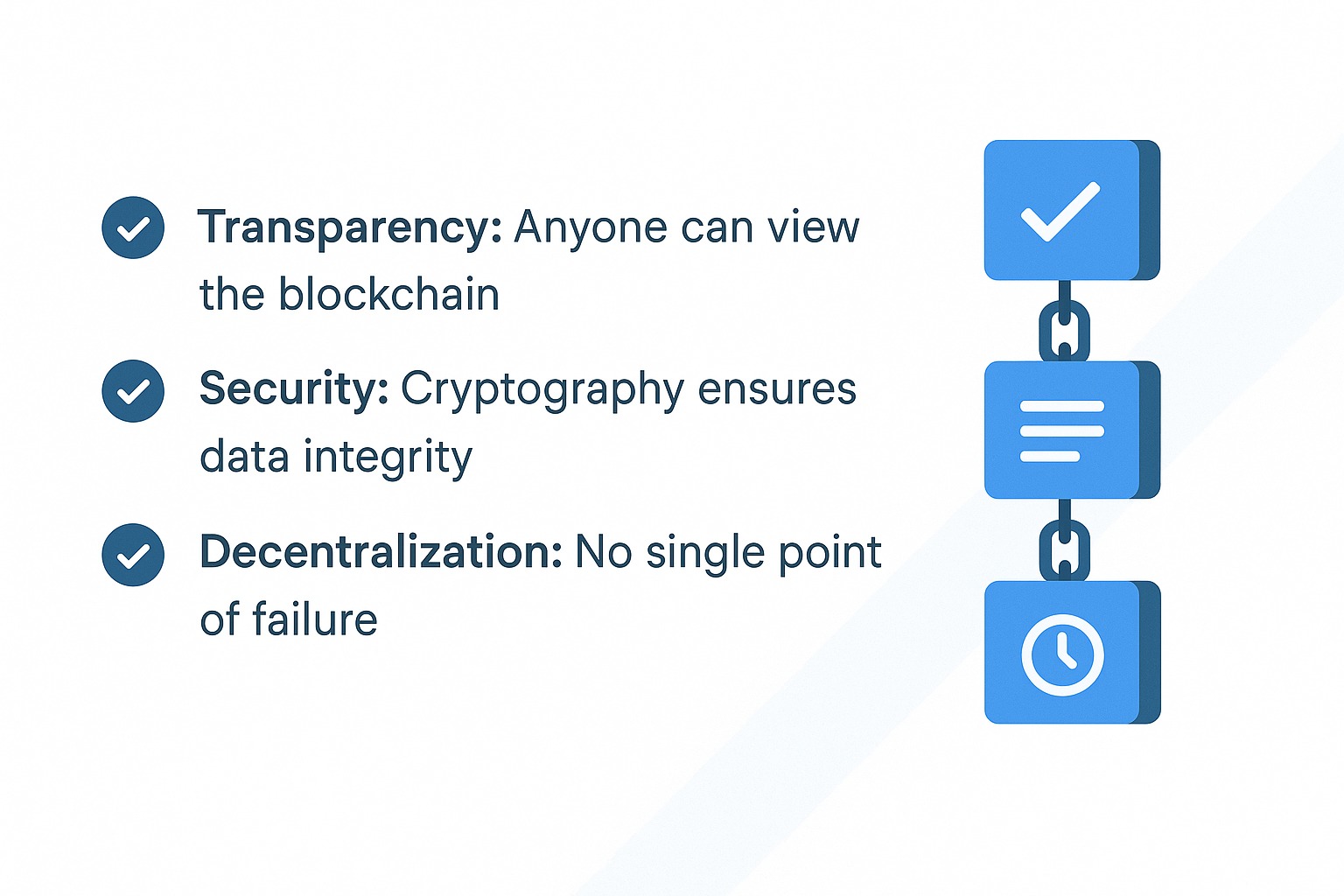
- Transparency: Anyone can view the blockchain.
- Security: Cryptography ensures data integrity.
- Decentralization: No single point of failure.
Types of Cryptocurrencies
Thousands of cryptocurrencies exist, each with unique features and purposes. Here are some of the most notable:
Bitcoin (BTC)
The original cryptocurrency, designed as a decentralized digital currency for peer-to-peer transactions.
Ethereum (ETH)
A platform for decentralized applications (dApps) and smart contracts, enabling programmable money.
Stablecoins
Cryptocurrencies pegged to stable assets (like USD) to reduce volatility (e.g., USDT, USDC).
- Altcoins: Alternative coins to Bitcoin (e.g., Litecoin, Cardano, Solana).
- Tokens: Built on existing blockchains, often for specific applications (e.g., Uniswap, Chainlink).
- Privacy Coins: Focus on enhanced privacy (e.g., Monero, Zcash).
Cryptocurrency Wallets
A cryptocurrency wallet is a digital tool that allows you to store, send, and receive cryptocurrencies. Wallets do not store coins physically; instead, they store private keys that grant access to your funds on the blockchain.
Types of Wallets
- Hot Wallets: Connected to the internet (e.g., mobile apps, web wallets).
- Cold Wallets: Offline storage (e.g., hardware wallets, paper wallets).
Popular Wallets
- MetaMask (Ethereum and tokens)
- Ledger Nano S/X (hardware)
- Trust Wallet (mobile)
- Exodus (desktop/mobile)
How to Buy and Sell Cryptocurrency
Buying and selling cryptocurrency is easier than ever. Here’s a step-by-step guide:
- Choose an Exchange: Sign up with a reputable exchange (e.g., Coinbase, Binance, Kraken).
- Verify Your Identity: Complete KYC (Know Your Customer) requirements.
- Deposit Funds: Add fiat currency (USD, EUR, etc.) or crypto to your account.
- Buy/Sell: Place buy or sell orders for your chosen cryptocurrency.
- Withdraw: Transfer your crypto to your personal wallet for added security.

Security and Risks
While cryptocurrencies offer many benefits, they also come with risks. Understanding these is crucial for safe participation.
- Volatility: Prices can fluctuate dramatically.
- Scams & Phishing: Beware of fake websites, emails, and social media scams.
- Loss of Private Keys: Losing your private key means losing access to your funds.
- Regulatory Risks: Laws and regulations are evolving and may impact your holdings.
The Future of Cryptocurrency
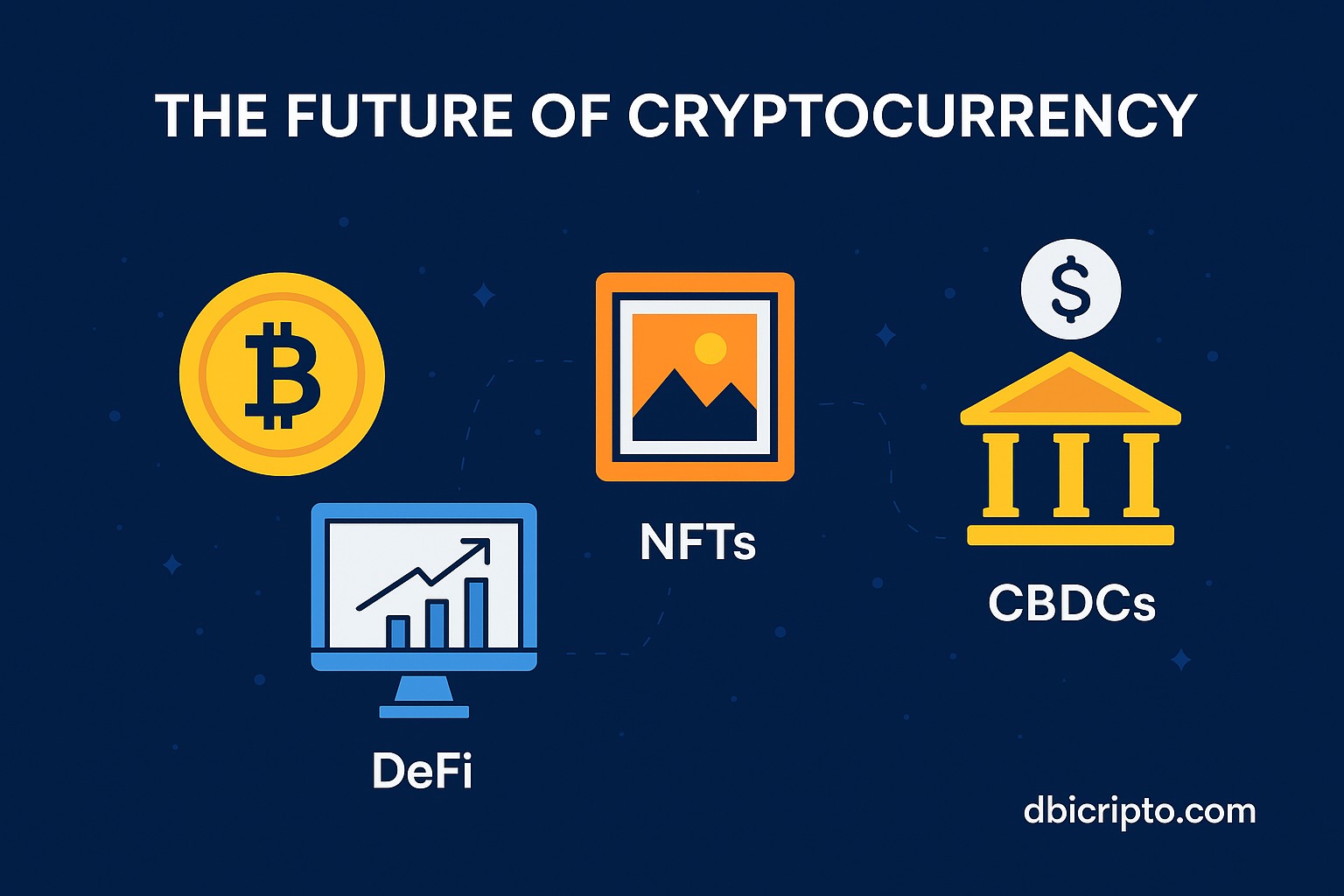
The future of cryptocurrency is both exciting and uncertain. Innovations like decentralized finance (DeFi), non-fungible tokens (NFTs), and central bank digital currencies (CBDCs) are reshaping the financial landscape. As adoption grows, expect continued evolution in technology, regulation, and use cases.
- DeFi: Decentralized financial services without intermediaries.
- NFTs: Unique digital assets representing ownership of art, music, and more.
- CBDCs: Digital currencies issued by central banks.
Glossary of Key Terms
- Blockchain
- A distributed ledger that records all transactions across a network.
- Private Key
- A secret code that allows you to access and control your cryptocurrency.
- Public Key
- A cryptographic code that allows others to send you cryptocurrency.
- Mining
- The process of validating transactions and adding them to the blockchain.
- Smart Contract
- Self-executing contracts with the terms directly written into code.
- Token
- A digital asset built on an existing blockchain.